
Washer Leaking Water? How to Find the Leak and Fix It
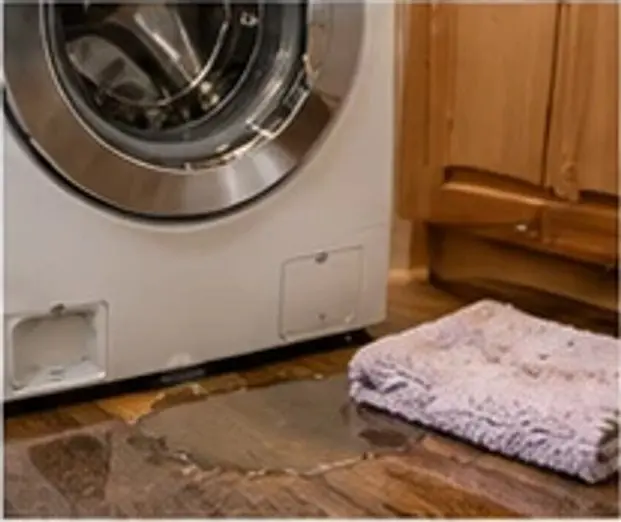
Notice when the leak happens
Before you pull the washer away from the wall, run a short cycle and watch. The timing of the leak narrows the cause quickly.
- While filling: fill hoses, hose washers, the water inlet valve, or the detergent dispenser.
- During washing or tumbling: the door gasket on a front-loader, oversudsing, or an internal hose.
- While draining: the drain hose, the standpipe, the drain pump or its filter cap.
- All the time, even when off: a fill hose or inlet valve that is under constant water pressure.
Put dry paper towels on the floor along each side of the machine. Where they get wet first tells you which side to look at. If your washer sits on a drain pan or in an upstairs laundry room, check the ceiling below as well, since a slow leak can show up there first.
Safe checks you can do yourself
Unplug the washer and, if you are going to touch the hoses, turn off both water valves behind it.
- Fill hoses. Look at both ends of the hot and cold hoses. Tighten loose connections by hand plus a small turn, and check for bulges, cracks or rust on the fittings. Rubber hoses age, and many manufacturers suggest replacing them every few years. Braided stainless hoses are a common upgrade.
- Hose washers. A flattened or missing rubber washer inside the hose fitting causes drips at the connection. They are inexpensive to replace.
- Drain hose and standpipe. Make sure the drain hose is secured in the standpipe and not pushed too deep. If the standpipe or laundry sink overflows during drain, the household drain is partly blocked.
- Drain pump filter cap. On many front-loaders, the filter behind the small lower panel must be screwed in fully. A cap left loose after cleaning leaks during the drain.
- Dispenser drawer. Clean built-up detergent and softener from the drawer and its housing. A clogged dispenser can overflow out the front.
Front-load door gasket leaks
The rubber boot around a front-loader's door forms the seal during washing. Water leaking from the bottom of the door usually means something is wrong with it.
Open the door and pull back the folds of the gasket. Look for a sock, hair tie or coin trapped in the fold, a buildup of lint and residue, or a tear. Wipe the gasket and the door glass clean, since even a thin layer of grime can break the seal. A torn gasket needs to be replaced, which involves removing clamps and sometimes the front panel, so it is a repair best left to a technician.
Too much detergent and oversudsing
High-efficiency washers use very little water, and excess foam can push water out of the door seal or the dispenser. Use only HE detergent, measure to the line on the cap rather than filling it, and use even less with soft water. Detergent pods are already measured, so do not add extra liquid on top.
If you see foam in the drum or at the dispenser, run a rinse cycle with no detergent. The leak often stops once the suds are gone.
Leaks from inside the washer
If the water appears under the machine and none of the outside checks explain it, the leak is likely inside the cabinet.
- Drain pump. A cracked pump housing or a worn seal can leak during the drain.
- Internal hoses. Hoses between the tub, pump and dispenser can loosen or split.
- Water inlet valve. A cracked valve can leak at the back where the hoses connect.
- Tub seal and bearings. On many front-loaders, a failed rear tub seal lets water reach the bearings. A loud rumble during spin often comes with it.
- Cracked tub. Less common, but possible after a severe imbalance or a heavy object in the drum.
Many Samsung and LG washers will display a code when they detect water where it should not be or a drain fault. Our Samsung washer error code guide covers the common ones.
When to call a technician
Call if water keeps appearing after you tightened the hoses, cleaned the gasket and cut back on detergent, if the leak is coming from underneath, if the gasket is torn, or if a leak comes with grinding or rumbling during spin. Internal leaks sit close to the motor and wiring, so stop using the washer until it has been checked.
Mr. Fixer provides washing machine repair for top-load and front-load washers across Metro Atlanta, including Samsung, LG, Whirlpool and Maytag. You will have a written estimate before any work starts. Call (678) 866-3669 or book a technician online.
Need it fixed?
Our technicians handle washer repair across Metro Atlanta, usually the same day. Diagnostic from $80, credited toward your repair.
Call (678) 866-3669FAQs
Why is my washer leaking from the bottom?
Leaks from underneath usually come from the drain pump, an internal hose, the water inlet valve or the tub seal. Check the external hoses and the drain filter cap first; if those are dry and tight, the source is inside the cabinet.
Can too much detergent make a washer leak?
Yes. Excess suds in a high-efficiency washer can force water out through the door seal or the dispenser. Use HE detergent, measure carefully, and run a rinse cycle with no detergent to clear foam.
How often should washing machine hoses be replaced?
Many manufacturers recommend replacing rubber fill hoses every few years, or sooner if they show bulges, cracks or rust at the fittings. Braided stainless hoses resist bursting better but still need periodic inspection.
More repair guides
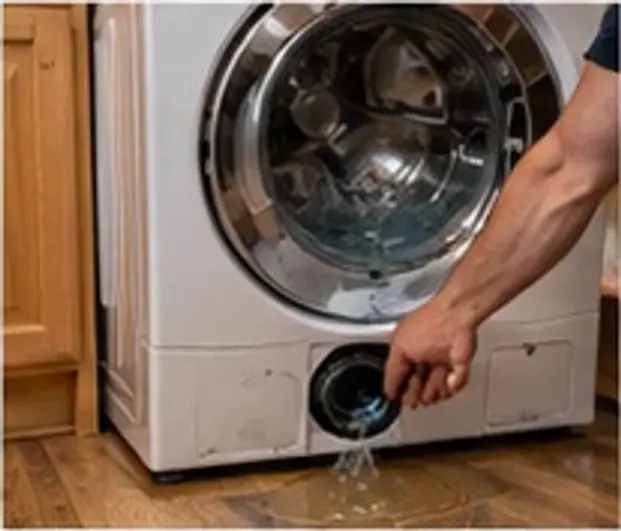
Washing Machine Not Draining or Spinning? Causes and Fixes
A washer that will not drain or spin usually has a clogged drain pump filter, a kinked or blocked drain hose, a failed drain pump, or a lid or door lo…
Read the guide →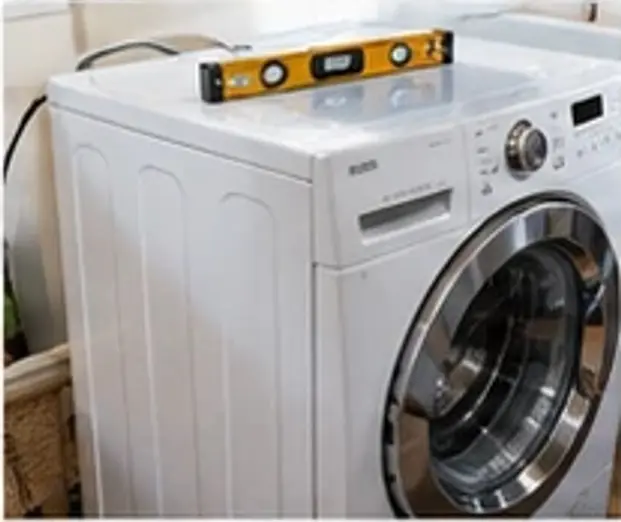
Washer Shaking, Banging or Walking? Causes and Fixes
A washer that shakes violently or walks across the floor is usually unlevel, unevenly loaded, or sitting on a floor that flexes. On new front-loaders,…
Read the guide →
Washer Won't Start? Step-by-Step Checks and Common Causes
When a washer will not start, the cause is often simple: no power at the outlet, a tripped breaker or GFCI, a control lock or delay start that is turn…
Read the guide →