
Refrigerator Ice Maker Not Making Ice? What to Check First
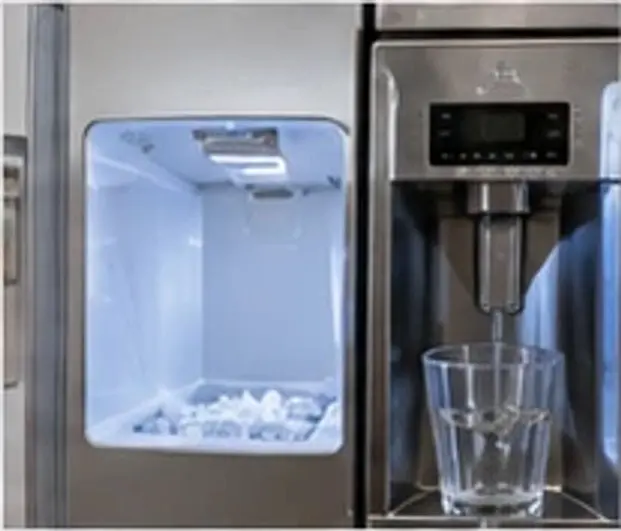
Make sure the ice maker is actually on
It sounds obvious, but a switched-off ice maker is one of the most common reasons for a service call that turns out not to need one. Depending on the model, the on and off control can be in a few places.
- Wire shutoff arm. Many traditional ice makers have a metal bail arm. When it is raised, the ice maker stops. A bag of frozen food pushed against it can raise it without anyone noticing.
- Switch on the ice maker. Some units have a small rocker switch on the side or front of the ice maker housing.
- Control panel setting. Many French-door and side-by-side models let you turn ice off from the main display. Look for an ice off or ice maker icon that is lit.
Also check that the ice bucket is pushed all the way in. On many in-door ice makers, a bucket that is not seated stops production.
Check the water supply
An ice maker needs steady water pressure and a clear path from the house line to the tray. Low or blocked flow produces small, hollow or no cubes.
- Test the water dispenser. If your fridge has one and it also runs weak or dry, the problem is upstream of the ice maker, often the filter, supply valve or line.
- Replace an old filter. A clogged filter restricts flow to both the dispenser and the ice maker. Many manufacturers suggest changing it about every six months, and sooner if your water has a lot of sediment.
- Open the supply valve fully. The shutoff under the sink or behind the fridge can get bumped partly closed during cleaning or plumbing work.
- Look for a kinked line. When a fridge is pushed back against the wall, the supply line can fold and choke off the water.
After a filter change, run a few gallons through the dispenser to purge air before expecting ice.
Freezer temperature and a frozen fill tube
Ice makers are designed to work when the freezer is at or near 0°F. If the freezer runs warmer, the ice maker may wait for the tray to reach its target temperature and never cycle. Set the freezer to the recommended setting, avoid blocking the vents near the ice maker, and give it a day to stabilize.
The opposite problem is a frozen fill tube. This short tube carries water from the inlet valve into the ice tray. If water trickles slowly or the valve drips, it can freeze inside the tube and block it. You may see a small icicle at the back of the ice maker. With the fridge unplugged, you can carefully thaw it using a hair dryer on a low setting, kept moving and away from plastic parts. If it freezes again within days, the inlet valve or low water pressure is usually behind it.
Signs the ice maker or valve has failed
When water, settings and temperature all check out, a part is likely at fault. These symptoms help narrow it down.
- The ice maker never tries to fill. No humming or water sound after a harvest cycle often points to a failed water inlet valve or a wiring issue to it.
- Cubes are stuck in the tray. The ejector or twist mechanism, motor or tray heater may have failed, so ice freezes in place and new water cannot enter.
- Ice clumps or a solid block in the bin. Ice that melts and refreezes points to the freezer running warm, a door left ajar, or a problem with the in-door compartment's seal or fan.
- In-door ice makers that frost up. On many French-door refrigerators, the ice compartment in the door relies on a fan and a seal. If cold air leaks out, frost and ice buildup can jam the ice maker.
On many Samsung refrigerators, ice maker problems also come with a code on the display. Our Samsung refrigerator error code guide explains what the common ones mean.
Try a reset, carefully
Many ice makers have a test or reset button, and some refrigerators can be reset by unplugging them for a few minutes. The exact method varies a lot by brand and model, so check your owner's manual before pressing anything.
Keep in mind that a test cycle can fill the tray right away. If the tray is already full or the fill tube is blocked, water can overflow into the freezer. Do not run the test repeatedly. If one test cycle produces no water, no movement, or no sound, stop there and have it checked.
When to call a technician
Call for service if the ice maker stays silent after a full day with the water on and the freezer cold, if the fill tube refreezes, if water leaks into the freezer during a fill, or if an in-door ice compartment keeps icing up. These usually come down to the inlet valve, the ice maker assembly, a sensor or the door compartment fan and seal.
Our ice maker repair service covers ice makers built into refrigerators and freezers across Metro Atlanta, including models from Samsung, LG, Whirlpool, GE and Frigidaire. We do not service standalone or undercounter ice machines. Phone (678) 866-3669 or book a visit online.
Need it fixed?
Our technicians handle ice maker repair across Metro Atlanta, usually the same day. Diagnostic from $80, credited toward your repair.
Call (678) 866-3669FAQs
How long does a new ice maker take to make ice?
After installation, a filter change or a reset, it commonly takes about a day before the first full bin. The freezer needs to be cold and the line purged of air first, and the first few batches are often small or uneven.
Why is my ice maker making small or hollow cubes?
Small or hollow cubes usually mean the tray is not getting enough water. A clogged water filter, a partly closed supply valve, low household water pressure or a weak inlet valve are the common causes.
Do you repair standalone ice machines?
No. Mr. Fixer repairs ice makers built into refrigerators and freezers, including in-door dispensers. We do not service standalone or undercounter ice machines from brands such as Scotsman, U-Line or Hoshizaki.
More repair guides
Refrigerator Water Dispenser Not Working? Causes and Fixes
When a refrigerator water dispenser stops working, the usual causes are a clogged or wrongly installed water filter, a frozen water line in the door, …
Read the guide →
How Much Does Ice Maker Repair Cost in Atlanta?
Repairing an ice maker built into a refrigerator or freezer starts with an $80 diagnostic at Mr. Fixer, credited toward the repair if you go ahead, an…
Read the guide →
Refrigerator Not Cooling? Common Causes and What to Check
A refrigerator that stops cooling is most often dealing with dirty condenser coils, a failed evaporator or condenser fan, a defrost problem that has i…
Read the guide →