
Refrigerator Too Cold and Freezing Food? Causes and Fixes
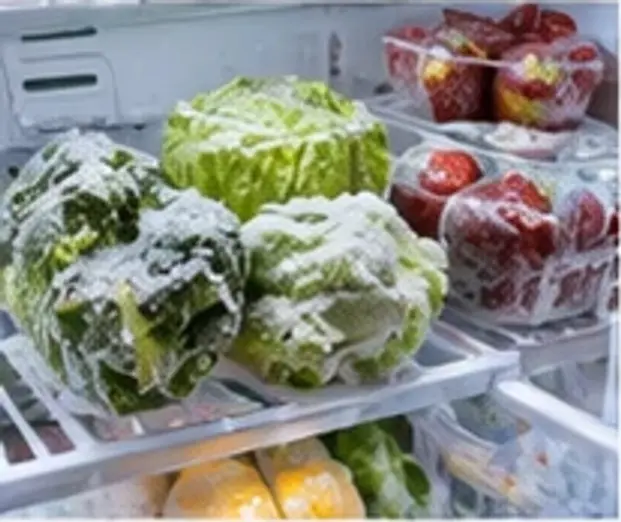
Check the settings first
- Temperature setting. Most manufacturers recommend about 37°F for the fresh food section. On dial controls, a higher number often means colder, which surprises many people.
- Fast-cool or quick-chill modes. Many models have a mode that drives the temperature down quickly after shopping. If it was left on or does not turn itself off, food near the vent can freeze.
- Linked controls. On some top-freezer and older models, the freezer control also changes how much cold air goes to the fridge. Turning the freezer colder can freeze food in the fridge.
- Specialty drawers. Many French-door models have a drawer with a chill or meat setting that runs close to freezing. Produce stored there may freeze.
Use a thermometer in a glass of water on the middle shelf to see the real temperature, and wait a day after any change.
Watch where food is stored
In most refrigerators, cold air from the freezer enters the fresh food section through a vent near the top or back wall. Items placed directly in front of that opening get a steady stream of below-freezing air, even when the rest of the fridge is at a normal temperature.
If only the items on the top back shelf freeze, move them forward or to a lower shelf and keep a little space in front of the vent. Delicate foods like lettuce, berries and eggs are the first to show freeze damage, so they are a good early warning. Keep them in the crisper drawers or on the door shelves, which run slightly warmer than the back of the cabinet.
A light load can make it worse
A nearly empty refrigerator has little thermal mass, so the few items inside get hit hard by each burst of cold air. This is common after a vacation or a move. Adding a few jugs of water helps stabilize the temperature.
The opposite can also contribute. If the door is opened constantly and the fridge keeps running long cooling cycles, the items closest to the vent may freeze while the door shelves stay warm.
Parts that cause a fridge to run too cold
- Air damper. A motorized or manual damper controls how much freezer air enters the fridge. If it sticks open, cold air pours in nonstop. Some dampers make a faint whir when they move, and a damper stuck open often causes freezing near the vent.
- Temperature sensor or thermistor. If the sensor reports a warmer temperature than reality, the control keeps cooling. These sensors are common on electronic models.
- Thermostat. On mechanical controls, a thermostat that does not open its contacts keeps the compressor running and everything gets colder.
- Control board. A board fault can hold the compressor or fans on regardless of temperature.
Testing these parts means reading resistance values and checking signals with the fridge powered, so it is a job for a technician.
Signs of a problem beyond freezing
Freezing food is sometimes the first visible sign of a control problem that has other effects. Pay attention to these clues, since they help a technician narrow down the cause faster.
- The compressor rarely shuts off. A healthy fridge cycles on and off through the day. Constant running with an overly cold interior points to a control or sensor fault rather than a cooling problem.
- Frost forming in the fresh food section. Light frost on the back wall of the fridge means it is running well below the intended temperature.
- A frozen dispenser line. On models where the water line passes through a cold area, an overly cold cabinet can freeze it and stop the dispenser.
- The display does not match reality. If the panel shows 37°F but your thermometer reads 30°F, the sensor or the board reading it is suspect.
Write down what you see and when it started. A short description of the pattern is often as useful as an error code, and it saves time on the visit.
When to call a technician
Call if food freezes even after you set the fridge to about 37°F, moved items away from the vent and turned off any fast-cool mode, or if the thermometer reads near or below 32°F. Also call if the compressor seems to run almost all the time, or if the display shows an error, since many electronic models flag sensor problems on screen. Samsung owners can check our Samsung refrigerator error codes page.
Mr. Fixer handles refrigerator repair throughout Metro Atlanta, including dampers, thermistors and control boards for GE, Whirlpool, Frigidaire, LG and other major brands. Repairs carry a 60-day warranty on parts and labor. Reach us at (678) 866-3669 or book a time online.
Need it fixed?
Our technicians handle refrigerator repair across Metro Atlanta, usually the same day. Diagnostic from $80, credited toward your repair.
Call (678) 866-3669FAQs
What is the right temperature for a refrigerator?
Most manufacturers suggest about 37°F, and food safety guidance says the fridge should stay at 40°F or below. Anything at 32°F or lower will start freezing water-rich foods.
Why is only the back of my fridge freezing food?
The cold air vent is usually at the back or top of the fresh food section. Food touching or sitting in front of it gets very cold air directly. Move items forward and keep the vent clear.
Can a bad thermistor make a refrigerator too cold?
Yes. If the sensor reports a temperature warmer than the real one, the control keeps cooling and the fridge runs too cold. A technician can test the sensor's resistance against the manufacturer's chart.
More repair guides
Refrigerator Not Cooling? Common Causes and What to Check
A refrigerator that stops cooling is most often dealing with dirty condenser coils, a failed evaporator or condenser fan, a defrost problem that has i…
Read the guide →
Samsung Refrigerator Not Cooling: Causes and Fixes
When a Samsung refrigerator stops cooling, the most common cause is ice building up on the evaporator coil behind the freezer's back panel because par…
Read the guide →
Refrigerator Leaking Water? How to Find the Source and Stop It
Most refrigerator leaks come from one of four places: a clogged or frozen defrost drain, the water supply line or inlet valve that feeds the ice maker…
Read the guide →