
Gas Oven Slow to Preheat or Not Heating? The Igniter Is the Usual Suspect
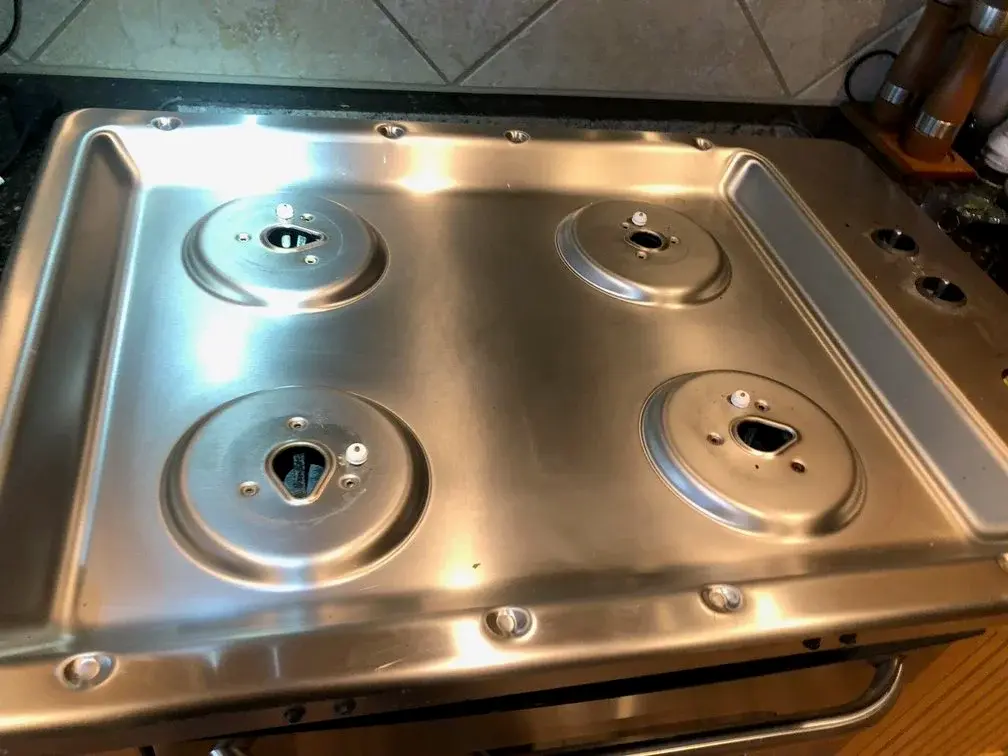
If you smell gas, stop here
Before any troubleshooting: if you notice a rotten-egg or sulfur smell near the range, do not try to light the oven, do not flip light switches or unplug anything, and do not use your phone inside. Leave the home with everyone in it and call your gas utility or 911 from outside.
A faint whiff for a second when the burner first lights can be normal on some ovens. A smell that lingers, grows stronger, or appears when the oven is not lit is not normal. Gas valve, regulator and supply line work is never a DIY job, and nothing in this guide should be attempted while you can smell gas in the kitchen.
How a gas oven igniter works
Most modern gas ovens use a hot surface igniter, sometimes called a glow bar. It is a small ceramic or silicon carbide element that sits next to the oven burner, usually under the floor panel at the bottom of the oven.
When you turn the oven on, electricity flows through the igniter and it heats until it glows orange. The igniter is wired in series with the oven safety valve, and that valve only opens once the igniter is drawing enough current, which also means it is hot enough to light the gas. This design is a safety feature: gas should not flow unless there is something hot enough to ignite it.
As an igniter ages, its resistance rises. It still glows, sometimes brightly, but it no longer pulls enough current to open the valve reliably. The result is an oven that lights late, lights only some of the time, or never lights at all.
Signs your igniter is getting weak
- Long delay before the flame. A healthy igniter typically lights the burner within a minute or so. If you now wait several minutes, the igniter is a strong suspect.
- Glow with no flame. You can see the igniter glowing orange through the vent slots or broiler drawer, but the burner never lights.
- Preheat takes much longer than it used to. Each time the oven cycles to hold temperature, it relights. A slow igniter adds delay to every cycle, so preheat stretches out and the temperature sags.
- Food undercooked at the set time. The oven spends part of each cycle waiting to relight instead of heating.
- Broiler works but bake does not, or the reverse. Many gas ranges have a separate igniter for each burner, so one can fail while the other is fine.
Igniters are a wear part. Failure after years of use is normal, not a sign that the oven itself is worn out.
Other causes of a slow or cold gas oven
The igniter is the most common answer, but not the only one. A technician will also look at these.
- Oven safety valve. If the igniter tests good but gas still does not flow, the valve itself may have failed.
- Temperature sensor. A sensor that reads wrong tells the control to shut the burner off early, which slows preheat and lowers the real temperature.
- Control board or thermostat. A faulty control may not send power to the igniter at all, and some models show an error code when this happens.
- Burner orifice or ports. Debris or spills can partly block the burner, giving a weak or uneven flame.
- Gas supply. If the cooktop burners also light poorly, the problem may be the supply or regulator rather than the oven.
For electric models and broader symptoms, our guide to an oven not heating covers more ground.
Safe checks you can do yourself
These steps do not involve opening any gas fittings or wiring. If you smell gas at any point, stop and follow the safety steps above.
- Confirm power. Gas ranges still need electricity for the igniter and controls. If the display is dark, check that the range is plugged in and the breaker has not tripped.
- Check the cooktop. Light a surface burner. If it lights normally, the gas supply to the range is on.
- Look at the igniter while it runs. Turn the oven on and watch through the broiler drawer or floor vents. Note whether it glows and how long it takes for a flame to appear. Then turn the oven off.
- Clear the oven floor. Remove foil liners or pans sitting on the oven bottom. They can block the burner vents and disrupt the flame.
- Check the settings. Make sure the oven is not in a timed bake, delay start, or Sabbath mode on models that have one.
Why igniter replacement is a job for a technician
Replacing an igniter means removing the oven floor and burner shield, disconnecting wiring, and working inches from the gas burner and valve. The new igniter also has to be the correct type for your model, because igniters are matched to the current draw of the safety valve they work with. A mismatched igniter can glow without ever opening the valve, or let gas flow before it is truly hot enough.
A technician will test the igniter's current draw, confirm the valve and control are working, install a genuine part, and then check the flame and temperature afterward. That last step matters: if the igniter was not the only problem, you find out now instead of halfway through cooking dinner.
When to call for gas oven repair
Book a visit if the oven takes several minutes to light, glows without lighting, preheats far slower than it used to, or will not hold temperature. Call your gas utility first, not a repair company, if you smell gas.
Mr. Fixer handles gas oven and range repair across Metro Atlanta, including igniters, safety valves, sensors and controls on brands such as GE, Whirlpool, Frigidaire and KitchenAid. The $80 range diagnostic is credited toward the repair, and you see a written estimate before work begins. Call (678) 866-3669 or schedule online. If the control panel shows a code on a GE range, our GE oven error code guide may help.
Need it fixed?
Our technicians handle oven & cooktop repair across Metro Atlanta, usually the same day. Diagnostic from $80, credited toward your repair.
Call (678) 866-3669FAQs
How long should a gas oven take to light?
On many gas ovens, the igniter glows for somewhere up to about a minute before the burner lights. If it routinely takes several minutes, or never lights, the igniter is likely weak.
Can a gas oven igniter glow and still be bad?
Yes. A worn igniter can glow bright orange but not draw enough current to open the gas safety valve. Glowing alone does not prove the igniter is good.
Is it safe to use a gas oven that lights slowly?
A slow igniter is a wear problem, and the safety valve is designed to keep gas off until the igniter is hot. Still, have it repaired soon, and stop using the oven and leave the home if you ever smell gas.
Why does my gas cooktop work but the oven does not heat?
The cooktop and oven use separate ignition parts. Working surface burners show the gas supply is on, which points toward the oven igniter, safety valve, sensor or control.
More repair guides
Thanksgiving Oven Checklist: Test Your Oven Before the Big Meal
Test your oven one to two weeks before Thanksgiving: preheat it to 350°F with an oven thermometer inside, bake something simple, light every burner an…
Read the guide →
Oven Not Heating? Causes and Fixes for Gas and Electric
An electric oven that will not heat most often has a burned-out bake element, a tripped breaker, or a failed temperature sensor or control, while a ga…
Read the guide →
Oven Not Heating Evenly? Causes and Fixes for Uneven Baking
Uneven baking is often caused by rack position, pans that block airflow, a short preheat, or a door that is opened often. If those are ruled out, the …
Read the guide →