
Dryer Making Noise? Squeaking, Thumping and Grinding Explained
Rule out the simple causes
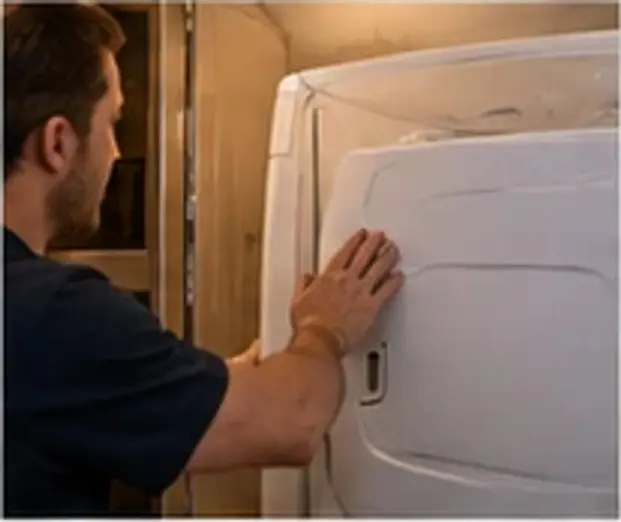
Many dryer noises have nothing to do with a broken part. Unplug the dryer before checking anything.
- Loose items. Zippers, buttons, shoes and sneakers bang loudly. Coins, pens and hair clips can get stuck in the drum's holes or seams and click on every turn.
- Lint screen housing. Small objects sometimes fall past the screen and rattle in the housing. Use a flashlight and a vacuum attachment to check.
- Leveling. An unlevel dryer vibrates and can buzz against a washer or wall. Adjust the feet so the cabinet sits flat and does not rock.
- Stacked sets. Make sure the stacking kit is tight. A loose stack shakes and knocks.
- Vent duct. A loose or sagging duct can rattle against the wall when the blower runs.
Squeaking or squealing
A high-pitched squeak that keeps time with the drum is one of the most common dryer complaints. The likely sources are:
- Idler pulley. This spring-loaded wheel keeps tension on the belt. When its bearing wears, it squeals, especially at the start of a cycle.
- Drum support rollers. Many dryers rest the back of the drum on two or more rollers. Worn rollers squeak or make a rhythmic thump.
- Drum glides or front bearing. Plastic or felt glides at the front of the drum wear thin, causing a scraping squeal and sometimes black marks on clothes.
- Rear drum bearing. On some designs, a bearing at the back of the drum squeals as it dries out and wears.
These parts tend to wear together, so a technician usually inspects all of them when one fails. Spraying oil or lubricant into the dryer is not a fix. It rarely reaches the worn surface, attracts lint, and can create a fire hazard near the heat source.
Thumping, banging and scraping
- Rhythmic thumping. A thump once per rotation often comes from flat spots on the drum rollers, or a belt that is worn or frayed.
- Thumping that stops after a few minutes. Rollers that develop flat spots while the dryer sits can thump until they warm up and round out. This is a sign they are near the end of their life.
- Scraping or metal-on-metal sound. Worn drum glides or felt seals let the drum rub against the cabinet. Ignore this too long and the drum or front bulkhead can be damaged.
- Sudden loud bang followed by no tumbling. The drive belt has probably broken. The motor may run but the drum will not turn.
Grinding, rattling and humming
A grinding or roaring noise that starts with the motor, even before the drum gets up to speed, often comes from a worn motor bearing or a blower wheel that is loose or damaged. Socks and small items that slip past the lint screen can end up in the blower housing and rattle or tick.
A loud hum with no tumbling means the motor is trying to start but cannot. The cause may be a broken belt, a seized pulley or drum, or a motor problem. Turn the dryer off right away rather than letting it hum, since a stalled motor heats up quickly.
Why noises are worth fixing early
Most dryer noises start small and get worse, and they rarely fix themselves. A squeaky idler pulley left alone can wear the belt until it snaps. Worn drum glides can let the drum drag on the front panel and score it. A noisy blower is often a sign of lint buildup inside the dryer, which is a fire concern.
Fixing a noise early usually means replacing one or two inexpensive wear parts rather than dealing with a belt failure or a damaged drum later. While we are inside the dryer for a noise, we also check the lint condition in the cabinet. A quick description of the sound when you call, such as a squeal at startup or a thump once per turn, helps the technician plan the visit.
When to call a technician
Call if the noise remains after you have removed loose items and leveled the dryer, if the dryer squeals, thumps or scrapes every cycle, if the drum stops turning, or if the motor hums without starting. Inspecting rollers, pulleys and glides means taking the cabinet apart near live wiring and, on gas models, the burner assembly, so it is a job for a trained technician.
Mr. Fixer offers dryer repair for gas and electric dryers across Metro Atlanta, including Whirlpool, Kenmore, Maytag, Samsung and LG. Our fully stocked trucks carry common rollers, belts and pulleys. Call (678) 866-3669 or schedule your repair online.
Need it fixed?
Our technicians handle dryer repair across Metro Atlanta, usually the same day. Diagnostic from $80, credited toward your repair.
Call (678) 866-3669FAQs
Why is my dryer squeaking?
The most common cause is a worn idler pulley or drum support rollers. Worn drum glides or a dry rear bearing can also squeak. These are wear parts and usually need to be replaced rather than lubricated.
Is it safe to keep using a noisy dryer?
A minor squeak is not an emergency, but loud grinding, banging or a humming motor that will not turn the drum should be checked before further use. Worn parts can lead to a broken belt or overheating.
Why does my dryer thump when it starts?
A thump that fades after a few minutes usually means the drum rollers have developed flat spots. As they warm up they round out temporarily, but they are wearing and should be replaced.
More repair guides
Dryer Not Heating? Causes, Safe Checks and Fixes
A dryer that runs but does not heat usually has a blown thermal fuse, a failed heating element (electric) or igniter (gas), a bad thermostat, or a tri…
Read the guide →
LG Dryer Not Heating: Causes and What to Check
An LG dryer that tumbles but stays cold usually has a blown thermal fuse, a failed heating element or igniter, a bad thermistor, or a tripped thermal …
Read the guide →
Dryer Takes Too Long to Dry? Causes and Fixes
A dryer that needs two or three cycles to finish a load is usually held back by restricted airflow: a clogged lint screen, a crushed or lint-packed ve…
Read the guide →